4 loan options for seller credits: what each lets a seller pay
Seller credit caps for conventional, FHA, VA and USDA loans side by side, what counts toward each cap, and how to size your request before you write the offer.


In this article
How much can a seller put toward my costs on each loan type?
- Conventional fits you if your loan-to-value sits at 90% or lower, where Fannie Mae lets seller help reach 6%, or 9% at 75% or less.
- USDA fits you if the home matches the program and seller help stays within 6% of the sales price under USDA's rule.
How much a seller can pay depends on your loan type. I picked these four because each has a seller-help limit in its own agency rules. Those are Fannie Mae's Selling Guide, HUD's FHA handbook, VA's closing cost rules and USDA's regulation. As a broker in California, I shop one file across many wholesale lenders, so I see these limits side by side.
Conventional tiers follow your loan-to-value (LTV), the loan amount as a share of the home's value. They don't follow the down payment you plan.
| Loan type | Seller help cap | Measured on | What counts toward it |
|---|---|---|---|
| Conventional (Fannie Mae), LTV above 90% | 3% | Lower of price or appraised value | Financing concessions, including seller-paid buydowns |
| Conventional (Fannie Mae), LTV 75.01% to 90% | 6% | Lower of price or appraised value | Financing concessions, including seller-paid buydowns |
| Conventional (Fannie Mae), LTV 75% or less | 9% | Lower of price or appraised value | Financing concessions, including seller-paid buydowns |
| Conventional (Fannie Mae), investment property | 2% | Lower of price or appraised value | Financing concessions, including seller-paid buydowns |
| FHA | 6% | Sales price | Origination fees, closing costs, prepaid items, discount points, buydowns |
| VA | All closing costs, plus up to 4% in other concessions | Reasonable value on the VA Notice of Value | Funding fee, paying off debts, temporary buydown escrow, extra points |
| USDA guaranteed | 6%, unless USDA provides otherwise | Sales price | Financing costs, closing costs, escrow accounts, furniture, other giveaways |
Conventional loan seller credits
Fannie Mae's Selling Guide lets a seller and other interested parties pay up to 3% above 90% LTV on a primary or second home. The limit rises to 6% from 75.01% to 90%, and 9% at 75% or less. Your loan size, measured against the home, decides how much credit you can use.
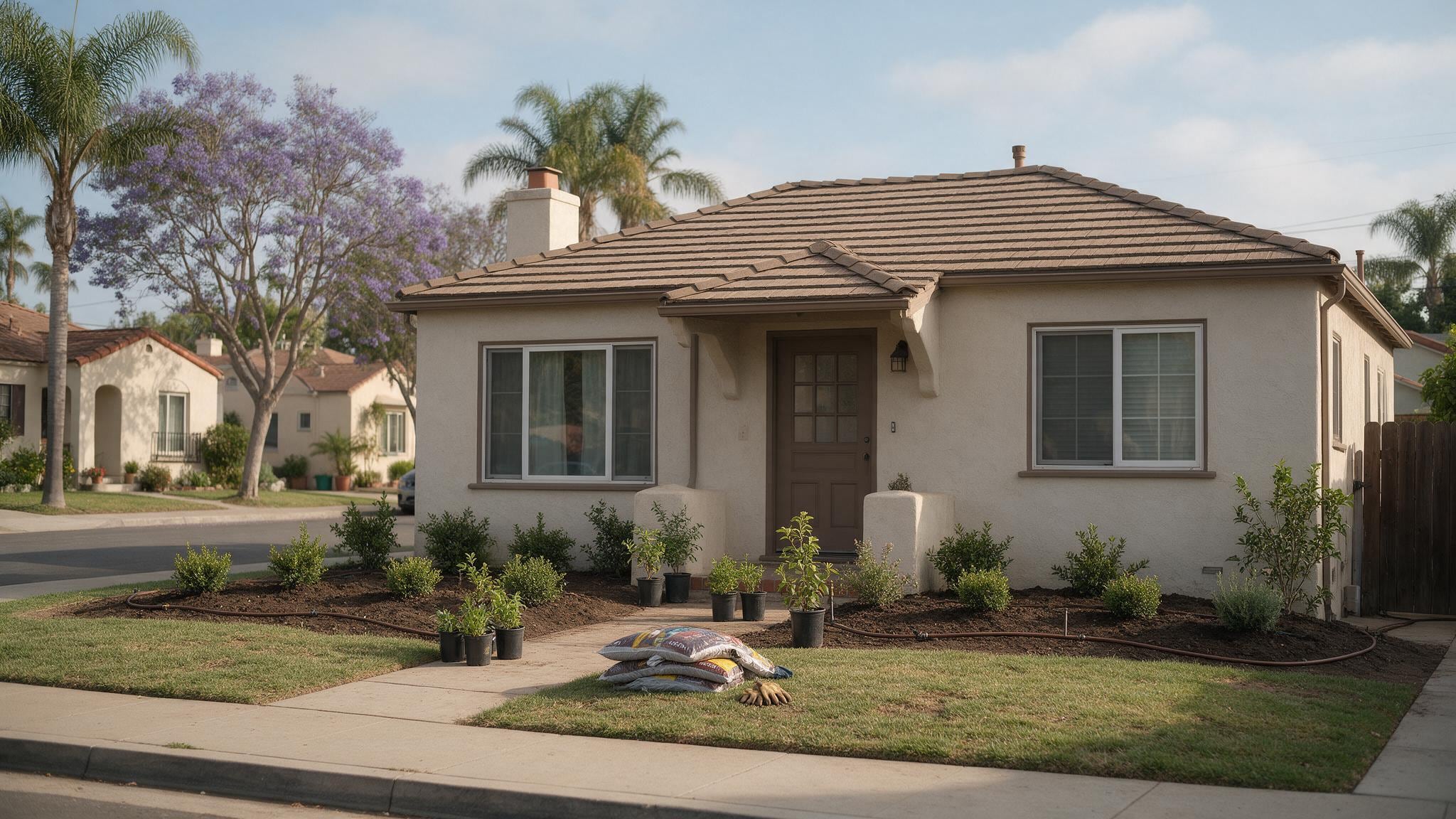
Say, as an example, the price and the appraisal both come in at $500,000. Fannie Mae's three tiers then turn into very different dollar amounts, and moving from the top tier to the lowest one triples what a seller can put in.
| Fannie Mae LTV tier | Cap | Example arithmetic on a $500,000 price and appraisal |
|---|---|---|
| Above 90% | 3% | 3% of $500,000 is $15,000 |
| 75.01% to 90% | 6% | 6% of $500,000 is $30,000 |
| 75% or less | 9% | 9% of $500,000 is $45,000 |
Who conventional fits
Conventional works best when you can keep LTV lower, because more room opens up at each tier. It also helps if your loan size stays inside the conforming limit. I covered that in San Diego's 2026 conforming limit.
Who else counts as a seller on conventional
The cap covers more people than the seller. Fannie Mae counts a builder or developer and the real estate agent as interested parties too. A lender joins that group only when it's the seller or tied to one.
A rate buydown paid by a seller, builder or affiliated lender also counts toward the cap. Every dollar spent on a lower rate is a dollar that can't go to closing costs.
What to watch with conventional
Fannie Mae wrote these tiers. Freddie Mac writes its own guide, and I'm not covering its limits here. Ask your lender which agency your loan goes to before you set the number in your offer.
FHA loan seller credits
According to HUD, the Department of Housing and Urban Development, on a Federal Housing Administration (FHA) loan the seller and other interested parties can put up to 6% of the sales price toward the buyer's origination fees, closing costs, prepaid items and discount points. On a $500,000 sales price, HUD's 6% cap works out to $30,000. Whether a seller contributes anything, and how much, depends on what the buyer and seller agree to.
Who FHA fits
FHA suits a buyer who wants the seller to carry a wide set of costs, from lender fees to prepaid taxes and insurance. If you're weighing it against conventional, my FHA vs conventional five-year cost comparison walks through it.
Does a buydown count on FHA
HUD puts any seller-paid rate buydown inside the 6%, so points and your other fees draw from one pool.
What to watch with FHA
HUD's Handbook 4000.1 treats help above your actual costs, or above 6%, as an inducement to purchase. Agent commissions and lender credits from premium pricing fall outside the limit.
VA loan seller credits
On a loan backed by the Department of Veterans Affairs (VA), a seller or builder can pay some or all of your closing costs with no limit. Concessions like your VA funding fee or paying off your debts are capped at 4% of the reasonable value on the VA Notice of Value.
Who VA fits
VA works well for an eligible buyer with big upfront fees. According to VA's Lenders Handbook, the seller can pay your normal costs without touching the 4%, which leaves room for other concessions.
What VA costs
VA's Lenders Handbook splits points two ways. Normal discount points for the market stay outside the 4%. A seller-funded escrow for a temporary buydown, and extra points for a permanent buydown, count against it.
What to watch with VA
VA measures the 4% on the reasonable value shown on the VA Notice of Value. If that value comes in low, the room for concessions shrinks with it.
USDA loan seller credits
Under USDA's regulation, 7 CFR 3555.102(h), a U.S. That help covers financing costs, closing costs, escrow accounts, furniture and other giveaways. The rule applies unless USDA provides otherwise.
Who USDA fits
USDA fits a buyer whose home and finances match the program and whose seller request stays inside the 6% limit USDA sets. Going over doesn't just trim the credit. It can stop the loan from being used on that home.
What USDA costs
USDA's list is broad. Furniture and giveaways count next to your fees, so a seller throwing in appliances or furnishings can use up room you meant for the loan costs.
What to watch with USDA
I'm reading this from USDA's regulation. The phrase "unless USDA provides otherwise" leaves room for a different limit, and USDA's handbook may spell out in more detail what counts.
What counts toward the cap, and what happens if you ask for too much
On a conventional loan, a seller credit can't exceed your actual closing costs. Any amount over the cap or over those costs gets subtracted from the price your lender uses to figure LTV. A lower price on paper means a higher LTV, which can drop you into a tighter tier.
Seller help also has a job it can't do. On a Fannie Mae loan, it can't pay your down payment, reserves or minimum contribution. That money has to come from you or an allowed source.
A family sale can work differently. Fannie Mae leaves a gift of equity from a seller who's an acceptable donor outside these limits. With one, the seller sells below value and the difference counts toward your down payment.
I had a client buy the house he grew up in from his mother, below what it would appraise for. We wrote that difference as a gift of equity instead of a capped seller credit. We needed a full appraisal, a signed gift letter from her and a contract stating the gift, and the lender read every page closely.
The paperwork looks a lot like the paper trail lenders want for gift money. How a credit or a gift of equity is taxed is a question for your CPA or tax adviser.
Is there an exception that lowers my seller credit limit?
Fannie Mae's cap follows LTV and combined LTV (CLTV), which is the total of all loans on the home against its value. So a second loan can push you into its 3% tier even when your down payment looks bigger.
Fannie Mae's Selling Guide gives HomePath properties their own exception to the 3% tier. If you're buying one, ask the lender how it applies.
Self-employed buyers hit a different wrinkle. Fannie Mae wrote these tiers, and a bank-statement loan usually plays by its own lender's rules. We close bank-statement and asset-based loans that retail banks turn away, so ask that lender for its seller credit limit in writing before the offer goes out.
If your tax returns show less than you make, how bank-statement loans work covers the qualifying side.
Should I use the seller credit to buy down my rate?
Seller-paid buydowns count toward the cap on conventional and FHA loans, so a buydown uses room you could otherwise spend on closing costs. On VA, only extra points and a temporary buydown escrow count toward the 4%.
Under federal Truth in Lending rules from the Consumer Financial Protection Bureau (CFPB), points a seller pays aren't part of your finance charge. That holds even when the seller passes them on through a higher price. Whether points make sense for you is a separate question, so ask for quotes with and without them on the same day.
The example below shows a loan with points, and the annual percentage rate (APR) reflects them. If a seller paid those points, they'd come out of the seller help limits above.
| Example loan detail | Figure, including the monthly principal and interest payment in dollars |
|---|---|
| Home price | $500,000 |
| Down payment | 20% ($100,000) |
| Loan amount | $400,000 |
| Term | 30-year fixed, 360 monthly payments |
| Rate (as of February 19, 2026) | 6.01% (6.08% APR) |
| Monthly principal and interest payment | $2,400.77 |
| Discount points assumed in the APR | 0.75 ($3,000) |
Example: a $400,000 30-year fixed loan at 6.01% (6.08% APR) with 20% down ($100,000) on a $500,000 home has 360 monthly payments of $2,400.77 in principal and interest. The APR assumes 0.75 discount points ($3,000, the median paid by 2023 home buyers who paid points, according to the CFPB) and no other lender fees. Taxes and insurance are not included, so the actual payment will be higher. The rate is the market average for February 19, 2026 from Freddie Mac Primary Mortgage Market Survey; yours depends on your credit, loan and property.
How I know this
I'm a mortgage broker, so I shop one file across a network of wholesale lenders, and I watch how each one counts seller help. Different lenders want different deals. In my client's family purchase, we wrote the help as a gift of equity with a full appraisal and gift letter. The limits here come from Fannie Mae's Selling Guide, HUD's Handbook 4000.1, VA's lender rules and USDA's regulation.
How to choose
Size your seller credit request to the cap on your loan and to your estimated closing costs, whichever is lower. The rules below match each loan type.
- If you borrow above 90% LTV on a conventional loan, conventional loan guidelines set the limit for a request at 3%, so look at a request at or under that limit.
- If you're at 75.01% to 90% LTV, Fannie Mae's limit is 6%, and at 75% or less it's 9%.
- If you use FHA or USDA, compare offers that keep seller help at or under 6% of the sales price.
- On a bank-statement loan, ask that lender for its own limit before the offer.
I'd pick the loan whose cap covers the costs you expect, then ask for the smaller of that cap and those costs. Before you write the offer, run your numbers on the free calculator on this page. It shows what the payment actually looks like at your price, with no credit pull.
This is general information, not a commitment to lend. Your final cap depends on the appraisal and your final LTV.
Questions people ask
How much can a seller put toward my closing costs?
A seller's limit depends on your loan type. Fannie Mae conventional loans allow 3%, 6% or 9% of the lower of price or appraised value by LTV on a primary or second home. FHA and USDA allow 6% of the sales price. On VA, a seller can pay all your closing costs, and other concessions are capped at 4% of reasonable value.
Can a seller credit pay my down payment?
Not on a Fannie Mae loan. Seller and interested-party help can't fund your down payment, reserves or minimum contribution. A gift of equity from a family seller who's an acceptable donor is treated differently.
What happens if I ask for a seller credit above the limit?
On a conventional loan, the amount over the cap or over your actual closing costs is subtracted from the price used to figure LTV. On FHA, HUD treats help above your costs or 6% as an inducement to purchase. On USDA, going over 6% can keep the loan from being used, unless USDA provides otherwise.
Does a seller-paid rate buydown count toward the limit?
Yes on conventional and FHA loans. On VA, a seller-funded temporary buydown escrow and extra points count toward the 4%, while normal discount points don't.
Spot something out of date? Tell Sophia.
More like this
4 CalHFA loan options for self-employed first-time buyers in California
Four CalHFA options compared for self-employed first-time buyers in California: who qualifies for each, what each costs later, and which one fits your income.
Sophia Warner · Mar 25, 2026 · 10 min readUsing your VA benefit again: what your entitlement covers
How a second VA loan works with partial entitlement: a worked county-limit example, when lenders ask for money down, and how to restore entitlement.
Sophia Warner · Mar 19, 2026 · 6 min read
FHA condo approval: what to check before you offer
A three-step FHA condo check (approved list, Single-Unit Approval, offer clause) and how to decide: FHA as usual, FHA with extra time, or another loan or building.
Sophia Warner · Mar 13, 2026 · 11 min read