Self-employed in San Diego: what to line up for a spring purchase
A San Diego broker on what self-employed buyers can prepare before spring: 2026 loan limits, a March prep timeline, and when waiting is the better call.


In this article
What should a self-employed buyer line up before spring in San Diego?
- As a broker, I take the same file to other lenders when one bank says no.
- Some lenders I work with qualify you from business deposits in place of your returns, and those loans carry their own pricing.
- In California, the 2026 San Diego County one-unit limit is $1,104,000 for conforming loans (FHFA) and Federal Housing Administration (FHA) loans (HUD), a ceiling, not an approval.
- It's already March, and the February prep steps still apply on a shorter clock.
- Before choosing a loan, ask for at least two Loan Estimates, the standard cost form a lender gives you, and compare them line by line.
The usual advice starts from a premise: spring brings more San Diego listings and more competition, so get ready in February. I treat that as the season's usual pattern, not a forecast. It's already March. The steps haven't changed, they just fit a shorter stretch.
I'm a senior loan officer at Rate Rebel (NMLS #282828) in San Diego, and I lend only in California. We're a mortgage broker, which means we shop one file across a network of wholesale lenders. Wholesale lenders are lenders that work through brokers rather than dealing with you directly.
The usual advice: tax returns and a February pre-approval
The usual advice goes like this. Spring brings more listings and more competition to San Diego, so get your financing lined up in February. Self-employed buyers get an extra warning: lenders read your tax returns, so expect a hard time.
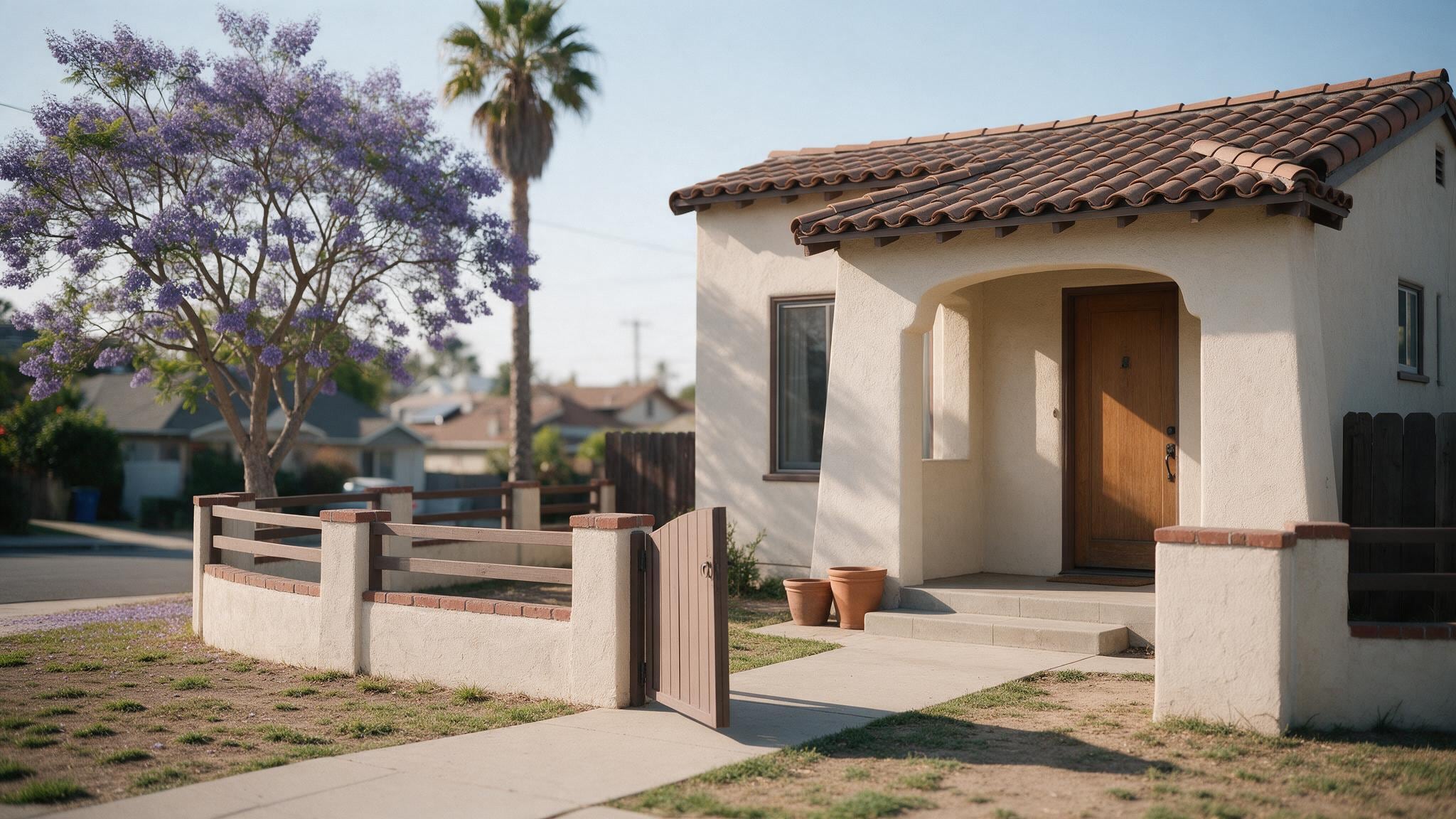
A lot of that is fair. With a lender's read in hand, you know what you can borrow before you look at a single house. Sizing the loan early is sound advice too.
Two published limits help you size the loan. A conforming loan is one that Fannie Mae and Freddie Mac can buy, and the Federal Housing Finance Agency (FHFA) sets its limit. An FHA loan is insured by the Federal Housing Administration, and the U.S. Department of Housing and Urban Development (HUD) publishes its limits.
| In California: 2026 San Diego County limit, one-unit home | Amount | Published by |
|---|---|---|
| Conforming loan limit | $1,104,000 | FHFA |
| FHA loan limit | $1,104,000 | HUD |
In California, both figures come from FHFA's full county loan limit list for 2026 and HUD's FHA forward mortgage limits for calendar year 2026.
In California, FHFA's 2026 conforming limit and HUD's FHA limit for San Diego County are the same number. If your loan amount comes in under it, neither limit rules those programs out. If it goes over, you're shopping a different kind of loan.
A limit only tells you the largest loan a program can back. It doesn't decide whether a lender says yes to you.
My post on sizing the loan against San Diego's 2026 limit walks through that check step by step.
What I see: your tax returns are one way to prove income
In my view, a no from your bank is one lender's answer. I shop one file across many wholesale lenders, and their rules for proving income differ a lot.
I hear it from self-employed buyers: my returns show less than I make. That's the write-offs. Your accountant's deductions shrink your taxable income, so a bank that reads only that number sees a smaller borrower than you are. A bank-statement loan reads the deposits coming into your business account instead.
We close bank-statement, asset-based and non-warrantable condo loans that retail banks turn away. An asset-based loan qualifies you from your savings and investments. A non-warrantable condo is in a building that doesn't meet Fannie Mae and Freddie Mac's rules, so many banks won't finance it.
Different lenders want different deals. As I see it, the real February job is finding the lender whose rules fit your file before the spring rush.
A bank-statement or non-warrantable condo loan has its own pricing and its own down payment rules. Ask for a standard-loan quote and a bank-statement quote on the same day, so both reflect the same market. Then compare the two quotes' rates, fees and cash to close side by side.
I explain how lenders count deposits in my post on bank-statement loans for self-employed buyers.
My February prep list, squeezed into March
- Early March: run your numbers. My free calculator estimates what you could borrow and the payment, with no credit pull.
- Early March: gather both kinds of income proof, your recent returns and your business statements, so a lender can read either one.
- Mid-March: count what you'd bring to closing, plus a cushion. In the example under this list, a $500,000 home takes $100,000 down plus $3,000 in discount points, which are fees paid up front to lower the rate. The annual percentage rate (APR) folds those points into a yearly cost.
- Mid-March: get the file shopped to the lenders whose rules match it.
- Before you tour: hold your loan amount up against the 2026 limits in the table above.
- Before you offer: put at least two Loan Estimates side by side.
Example: a $400,000 30-year fixed loan at 5.98% (6.05% APR) with 20% down ($100,000) on a $500,000 home has 360 monthly payments of $2,393.06 in principal and interest. The APR assumes 0.75 discount points ($3,000, the median paid by 2023 home buyers who paid points, according to the Consumer Financial Protection Bureau (CFPB)) and no other lender fees. Taxes and insurance are not included, so the actual payment will be higher. The rate is the market average for February 26, 2026 from Freddie Mac Primary Mortgage Market Survey; yours depends on your credit, loan and property.
When would waiting be the better call?
Waiting can make sense when one of your income sources is new and has no history yet. Lenders want to see that income has started and will continue before they count it.
I saw this with a client who came to me to buy a condo in Clairemont a few months after her divorce. The support she received counted as income once it had started and was set to continue. She waited until those payments had a short history behind them. Then her file went through without surprises.
So if you just added a new stream of income, it can make more sense to let it build a short history than to rush an offer this spring. Starting later is a real choice, and there's no pressure to rush it.
Loan size can change my view too. If your loan would go over FHFA's 2026 conforming limit for San Diego County, you're shopping a different kind of loan with its own rules. People usually call it a jumbo loan.
Some buyers ask whether their income gets checked again before closing. I cover that in whether lenders re-check self-employed income.
What it means for you: apply when your file is ready
If you plan to write an offer this spring and your income has a track record, it makes sense to get a lender's read now, through your business deposits if your returns run thin. If your income is new or your paperwork is still scattered, a later start that gives your file time to build fits you better than a rushed spring. Either way, a good first step is your own estimate from the calculator on this page.
Waiting for rates to fall is a bet. A lower rate doesn't always mean the cheaper loan, and your monthly payment matters more than the price of the house.
To see what the payment actually looks like, read five numbers together: the rate, the APR, the cash down, the term and the payment. The APR folds certain costs, like discount points, into a yearly figure, so two loans compare on the same footing.
| Rate and APR (as of Feb. 26, 2026) | Home price and down payment | Loan amount and term | Monthly payment (principal and interest) |
|---|---|---|---|
| 5.98% (6.05% APR) | $500,000; 20% ($100,000) | $400,000, 30-year fixed, 360 monthly payments | $2,393.06 |
Example: a $400,000 30-year fixed loan at 5.98% (6.05% APR) with 20% down ($100,000) on a $500,000 home has 360 monthly payments of $2,393.06 in principal and interest. The APR assumes 0.75 discount points ($3,000, the median paid by 2023 home buyers who paid points, according to the Consumer Financial Protection Bureau (CFPB)) and no other lender fees. Taxes and insurance are not included, so the actual payment will be higher. The rate is the market average for February 26, 2026 from Freddie Mac Primary Mortgage Market Survey; yours depends on your credit, loan and property.
To see how income, taxes and insurance shape a payment here, read $150K income in San Diego: what sets your payment.
How I know this
This advice comes from my files over 21 years as a loan officer and broker, the 2026 limits from FHFA and HUD, and Freddie Mac's February 26, 2026 survey. One self-employed contractor came to me after his bank said no. His returns showed about half of what he earned. We used business bank statements instead, found a lender that liked the deal, and he closed.
Questions self-employed buyers ask me
How many years of returns do I need?
I can't give you one number, because each lender and program sets its own document rules. Some lenders I work with can qualify you without leaning on your returns at all.
My tax returns show less than I really make. Can I still qualify?
Possibly. We close bank-statement loans that read your business deposits in place of your taxable income. They're priced differently, so ask for a standard quote too.
Do lenders hate self-employed people?
No. In my experience lenders write different rules, and as a broker I take one file to the wholesale lenders whose rules fit it.
My accountant saved me on taxes and now I can't qualify. What now?
Your write-offs did their job at tax time. Ask a lender who offers bank-statement loans to read your deposits, then weigh that quote against a standard one.
What should I line up in February for a spring purchase in San Diego?
In California, the same three things: a lender's read of your income, your cash counted, and a loan amount checked against the 2026 conforming limit in the table above. In March, the list still applies over a shorter stretch.
What I can't tell you from here
I can't tell you your rate, your approval or your payment until a lender reads your file. The calculator on my site gives you a starting estimate without touching your credit. An estimate isn't an approval and it isn't a rate.
Questions about your write-offs or how you file belong with your CPA.
Spot something out of date? Tell Sophia.
More like this

Bank-statement loans: how self-employed buyers qualify when their tax returns show less than they make
Your tax returns aren't the only way to prove what you earn. Here's how lenders use your deposits instead, what it costs, and what to do before you look at a house.
Sophia Warner · Sep 26, 2026 · 4 min read
Do lenders re-check self-employed income before closing?
Lenders re-check your job or business before closing. What self-employed buyers in escrow should hold steady, what can stop a loan, and who to ask first.
Sophia Warner · Feb 3, 2026 · 6 min read
Divorced and self-employed: what a lender reads before you buy
One San Diego file from decree to underwriting: what the lender read first, when support counted as income, and what self-employed buyers should ask.
Sophia Warner · Jan 29, 2026 · 8 min read